
China is behind where AI advantage is most capital-intensive
China is behind where AI advantage is most capital-intensive
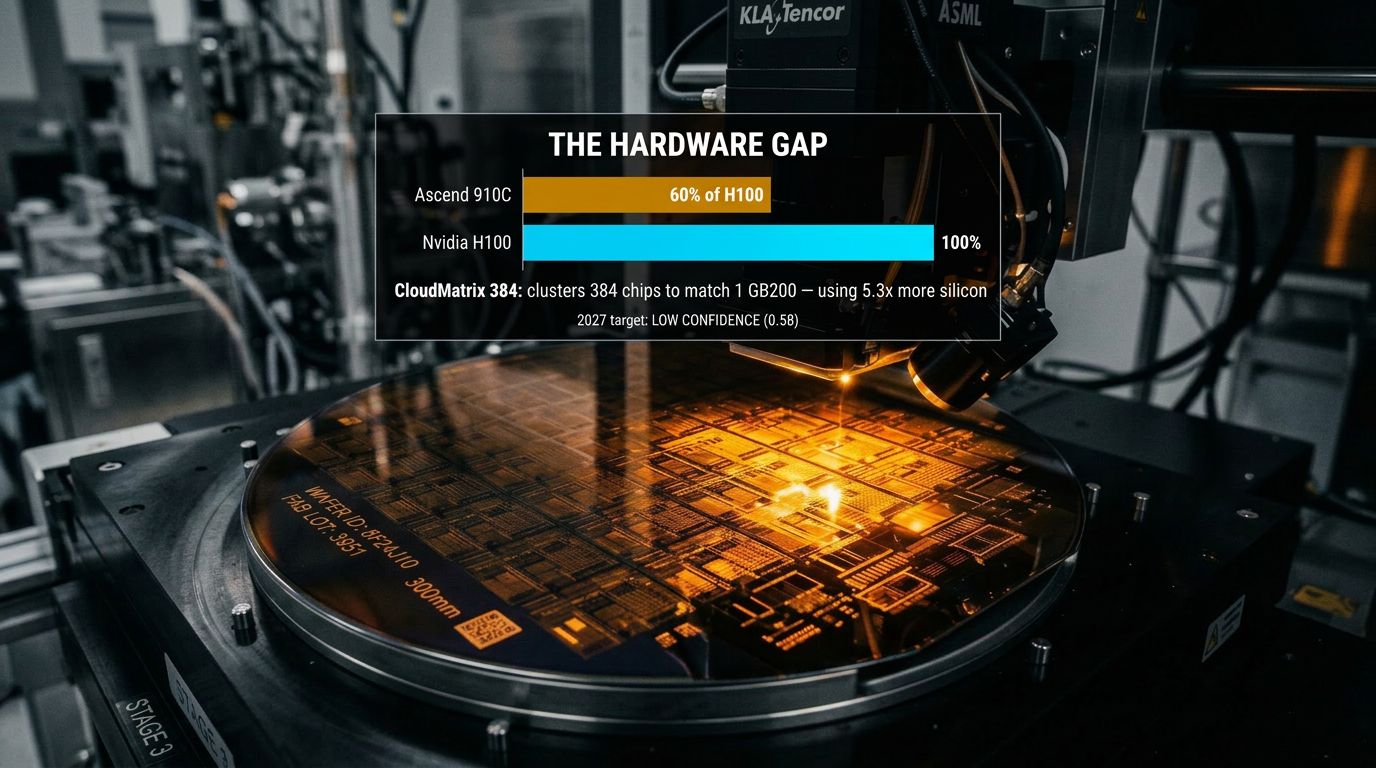
U.S. export controls tightened again in January 2026, while Huawei's Ascend 910C remained far below Nvidia's leading hardware on real-world performance, inference efficiency, and silicon footprint.
Editor's Insight
This is not a story about China closing the per-chip gap. It is a story about what happens after that becomes implausible.
CloudMatrix shows the systems strategy
CloudMatrix shows the systems strategy
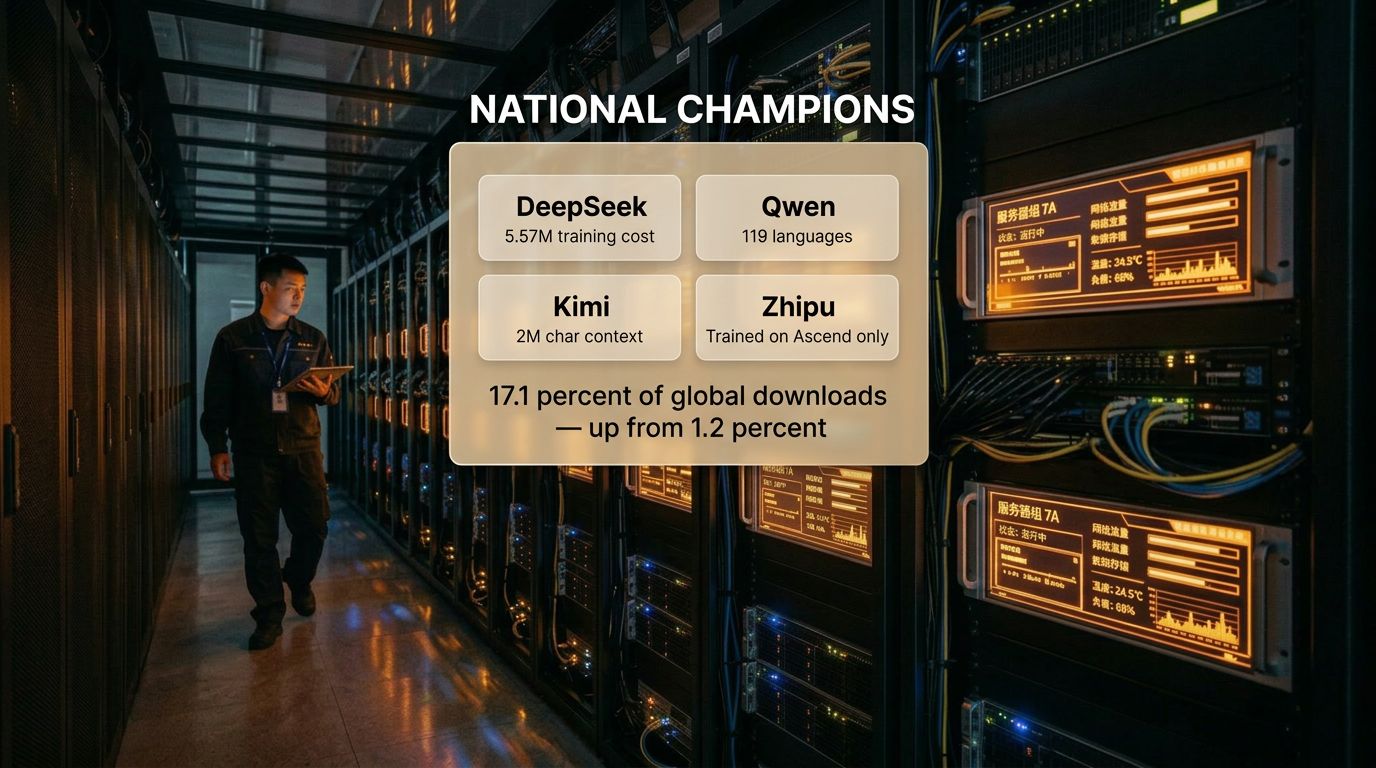
Huawei's CloudMatrix 384 can approach GB200 NVL72 system-level competitiveness by linking far more chips together, trading elegance for aggregate throughput.
Editor's Insight
China did not solve scarcity. It changed the optimization function.
Open weights and domestic clouds lower the hardware bar
Open weights and domestic clouds lower the hardware bar
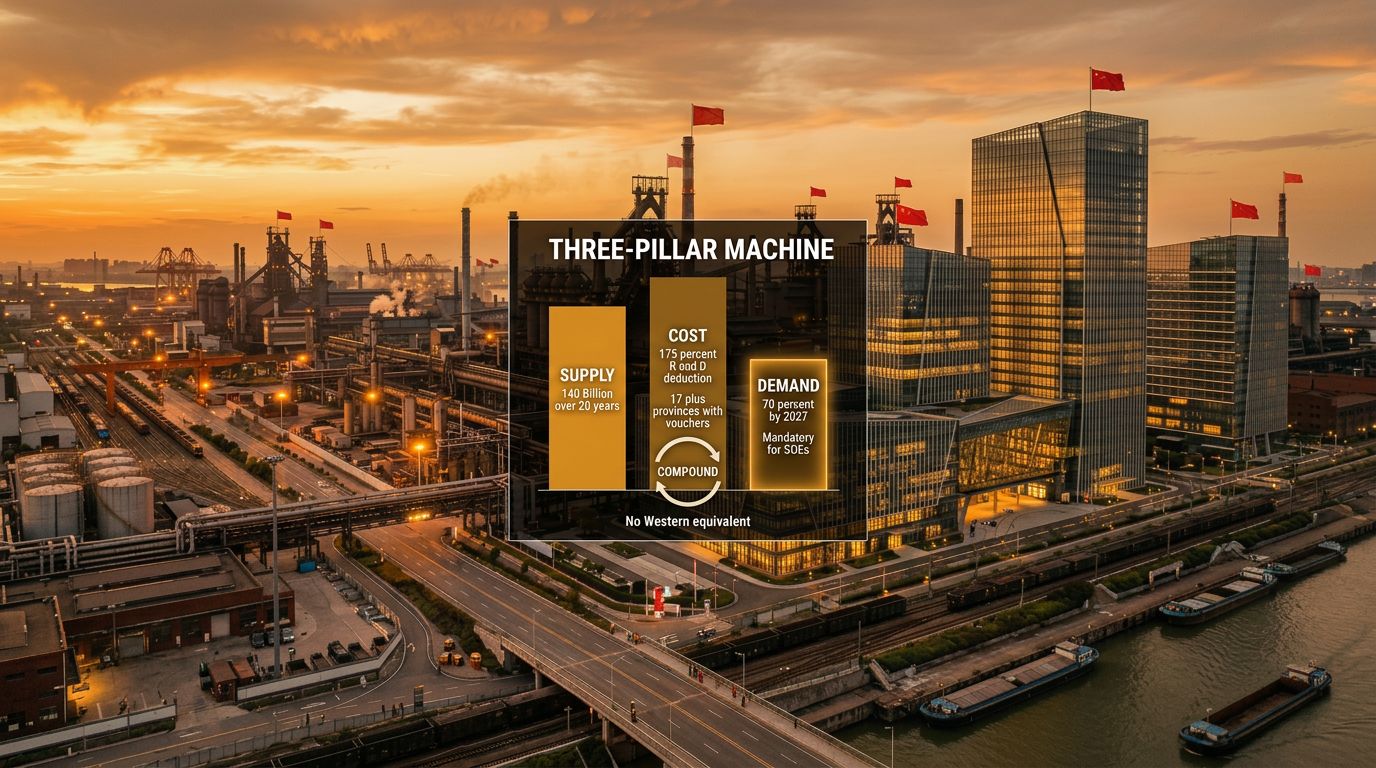
Open-weight releases and Qwen's derivative sprawl matter because they expand what can run on good-enough inference hardware. The strategic object is the toolchain, not only the frontier model.

Beijing is routing money, standards, and demand
Beijing is routing money, standards, and demand
Big Fund III, budget investment, treasury bonds, procurement approvals, and content rules make the state a scheduler of capital and market structure.
Deployment breadth is becoming a form of power
Deployment breadth is becoming a form of power
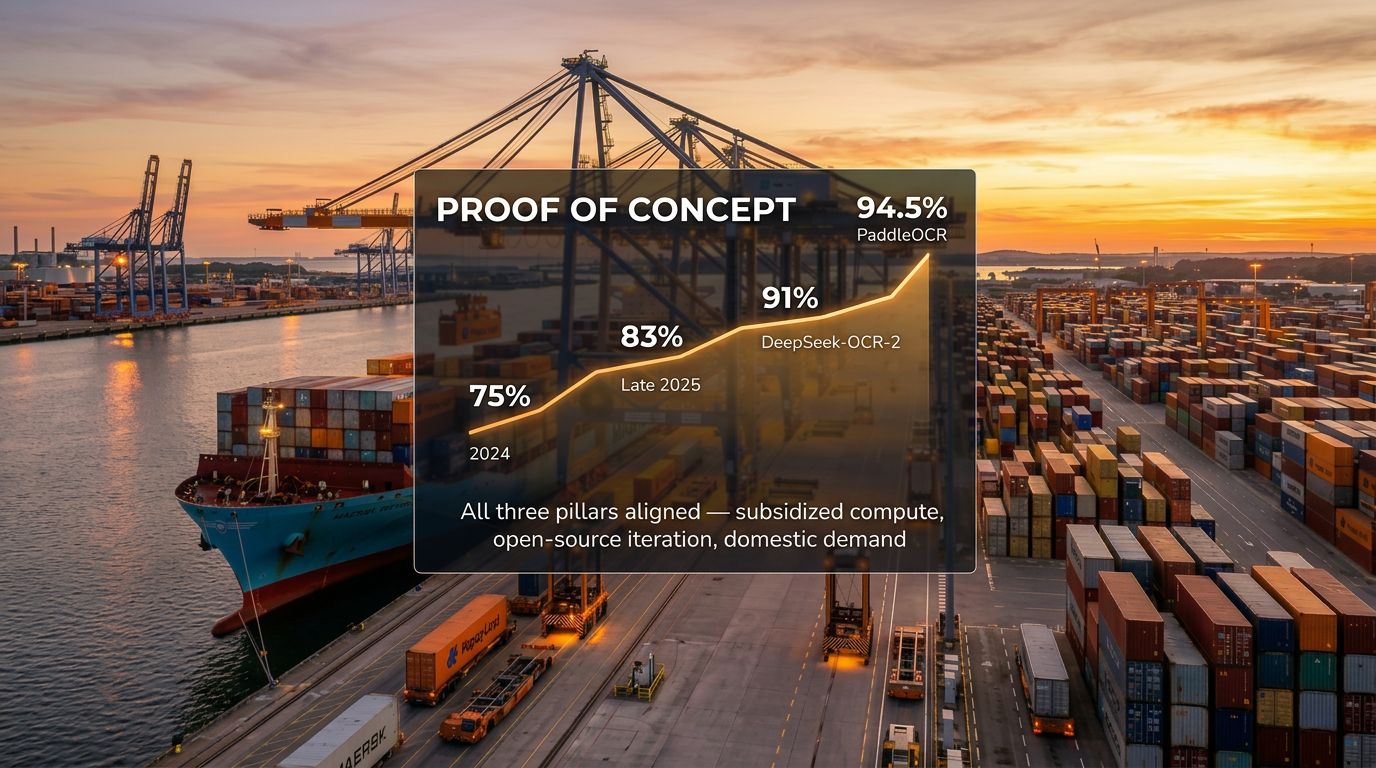
China may matter in AI because it can embed AI broadly across an economy, even if it never wins cleanly at the frontier chip layer.
Editor's Insight
The commercial picture is ugly, but geopolitical capability does not require pretty margins.
This is not a story about China closing the per-chip gap. It is a story about what happens after that becomes implausible.