
JevonsMaxxing
JevonsMaxxing
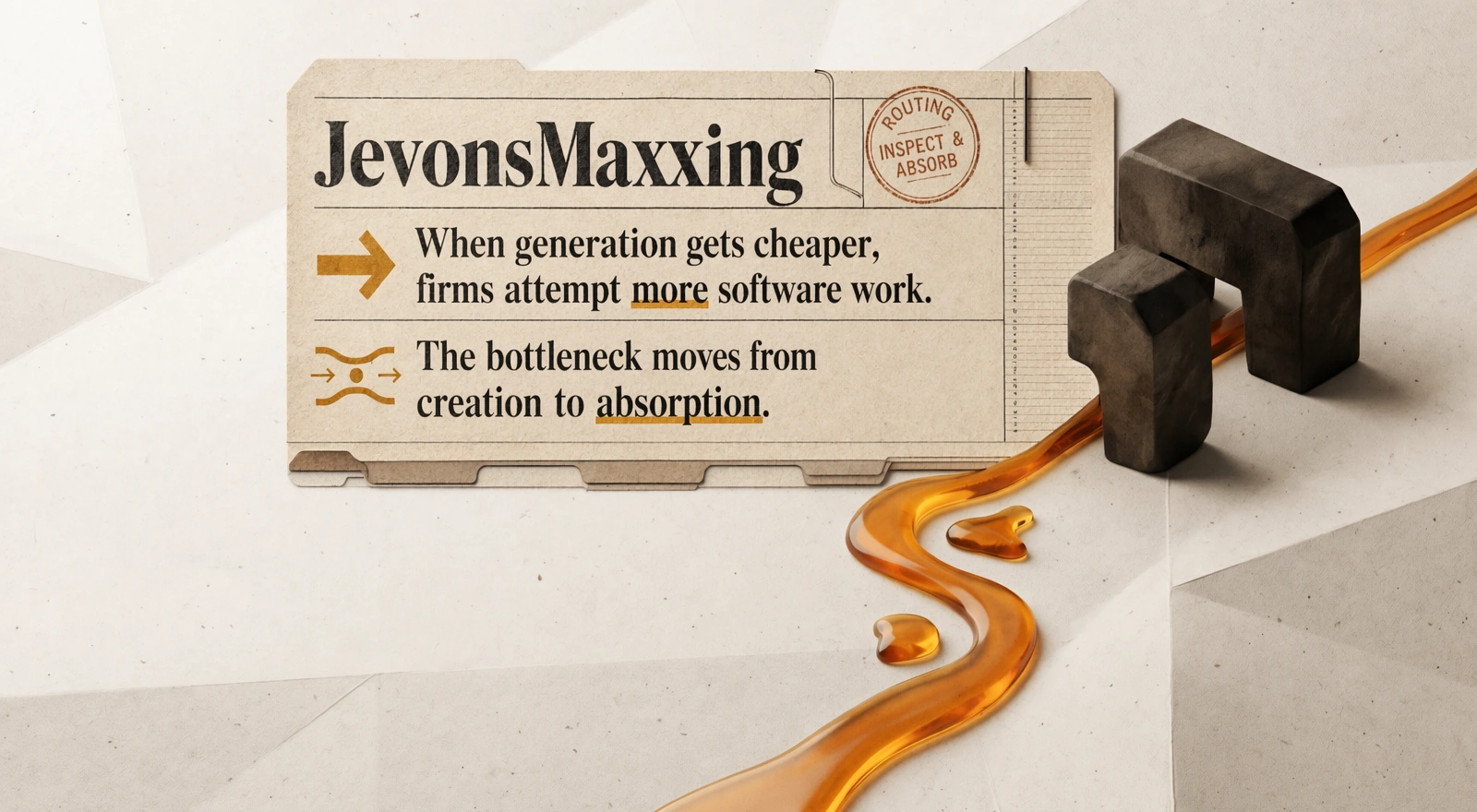
JevonsMaxxing means that cheaper AI does not automatically make a company leaner. It can first make the company attempt far more work: more code, more drafts, more tickets, more ideas, more experiments. The hard part then moves to deciding what is worth keeping, checking, funding, securing, and turning into real output.
Editor's Insight
This slide defines the term as an economic diffusion pattern, not internet slang or an anti-AI verdict.

The Question Is Not Whether Work Disappears
The Question Is Not Whether Work Disappears
The easiest question is whether AI will replace junior workers. The better question is what happens when AI makes every worker able to produce far more unfinished work. A company may get a flood of useful attempts, but those attempts only matter if someone can review them, accept them, and connect them to actual value.
Editor's Insight
The debate map is scaffolding. Surface the reframe without making a crowded one-slide taxonomy.
Scarcity Moves Downstream
Scarcity Moves Downstream
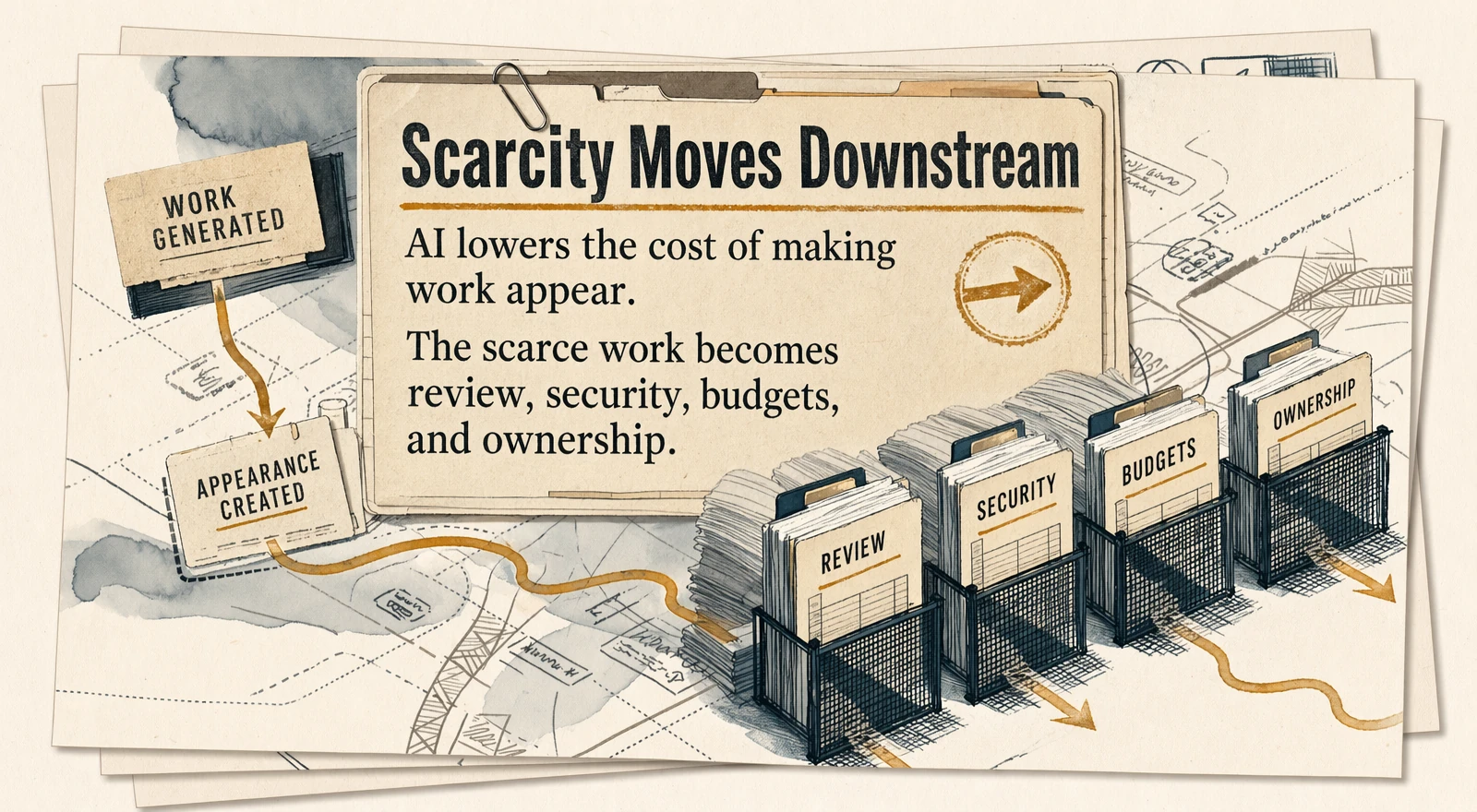
Jevons Paradox is the old idea that making something more efficient can make people use more of it, not less. With AI, the same thing can happen to work. If generating code or documents gets cheaper, companies may generate much more of it, while review, trust, security, budgets, and ownership become the new bottlenecks.
Local Utility Outran The Budget Model
Local Utility Outran The Budget Model
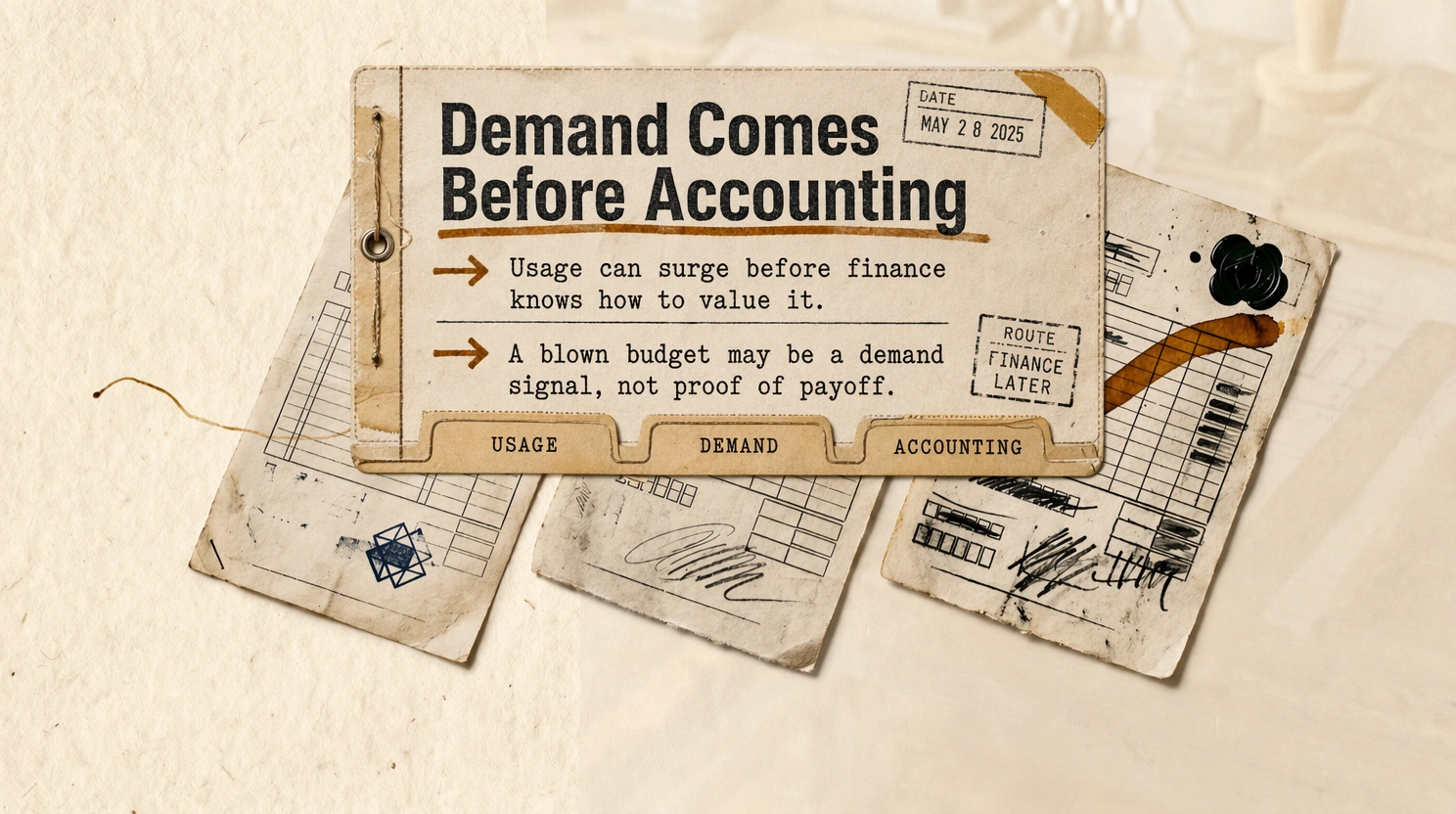
Uber is a useful example because the signal is ambiguous in the right way. Engineers used Claude Code so much that the expected annual budget was reportedly blown through early. That does not prove the tool was wasteful, and it does not prove it had already paid for itself. It proves demand arrived faster than the accounting system could explain.
Intake Is Not Assimilation
Intake Is Not Assimilation
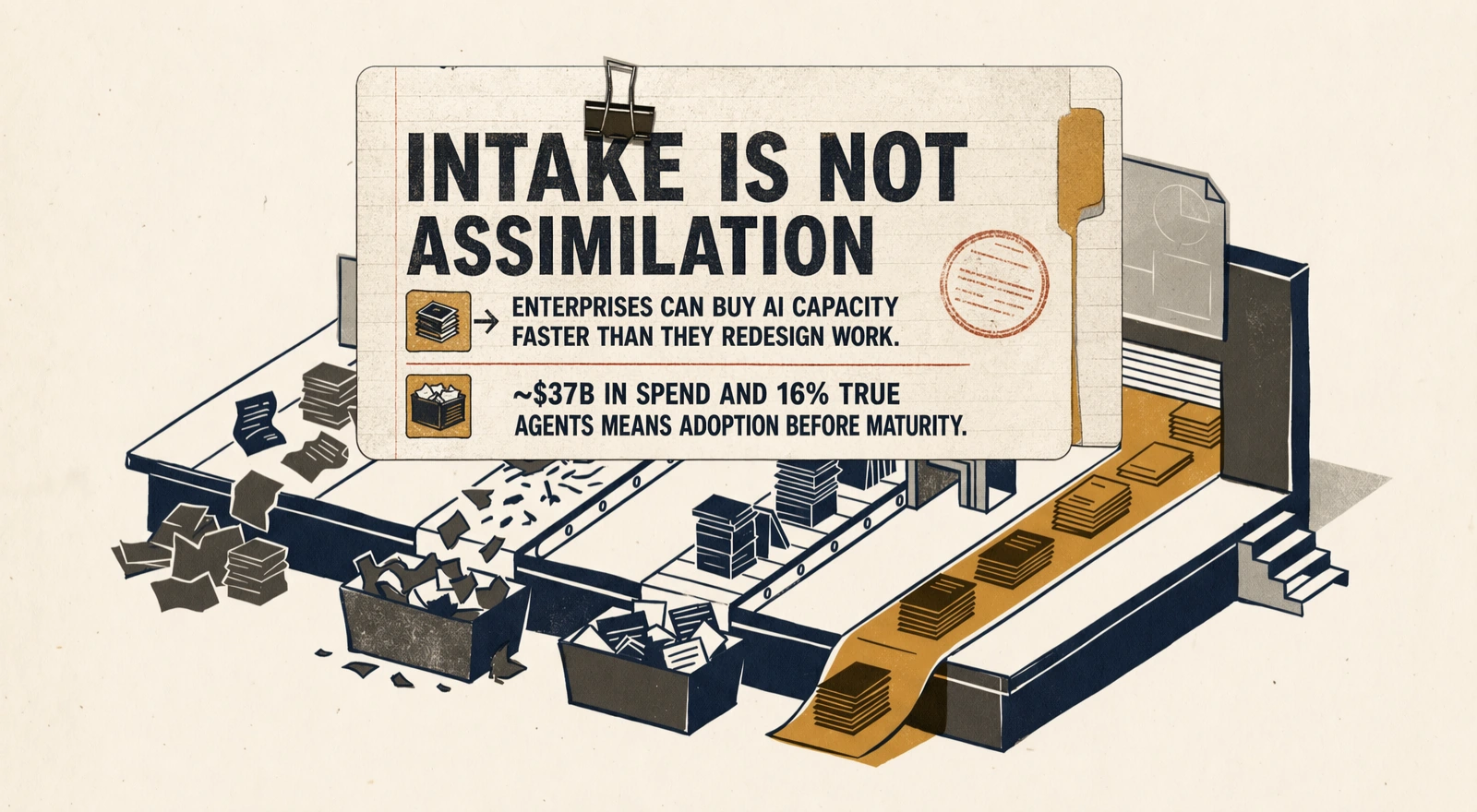
Buying AI is easier than digesting it. Enterprises can spend billions on tools and run many experiments before they have redesigned workflows, review habits, security rules, and budgets around them. That is why spending and usage can look impressive while mature, company-wide adoption still lags.

More Output Also Means More Exposure To Validate
More Output Also Means More Exposure To Validate
Software shows both sides of the story. AI can help create and merge much more code, but every extra change still has to be trusted. Someone has to check whether it breaks something, adds a risky dependency, exposes a secret, changes a permission, or creates a security hole. More output can create more review debt.

Demand Becomes Value Only After Sorting
Demand Becomes Value Only After Sorting
The point is not that AI demand is fake. The point is that demand becomes value only after sorting. The companies that benefit most will not simply be the ones with the most AI usage. They will be the ones that can route the work, verify it, budget it, assign ownership, and keep only the output that actually helps.
This slide defines the term as an economic diffusion pattern, not internet slang or an anti-AI verdict.