
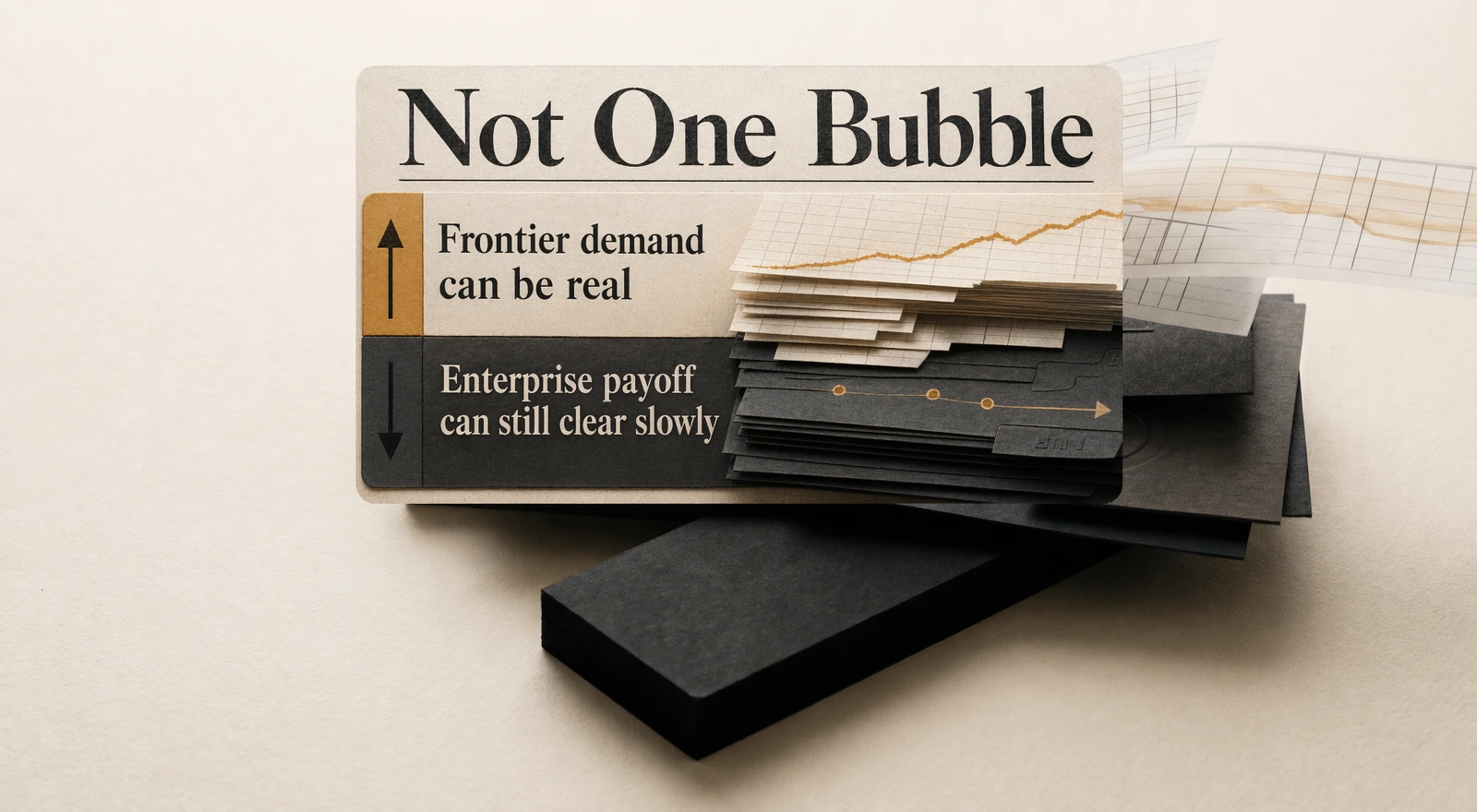
AI Is Not One Bubble
AI Is Not One Bubble
The argument is not that AI is obviously real or obviously a bubble. It is that different parts of the AI economy are moving at different speeds. The biggest model companies may have real customers and fast-growing revenue, while ordinary enterprises still struggle to turn those tools into repeatable savings, better work, or higher profits.
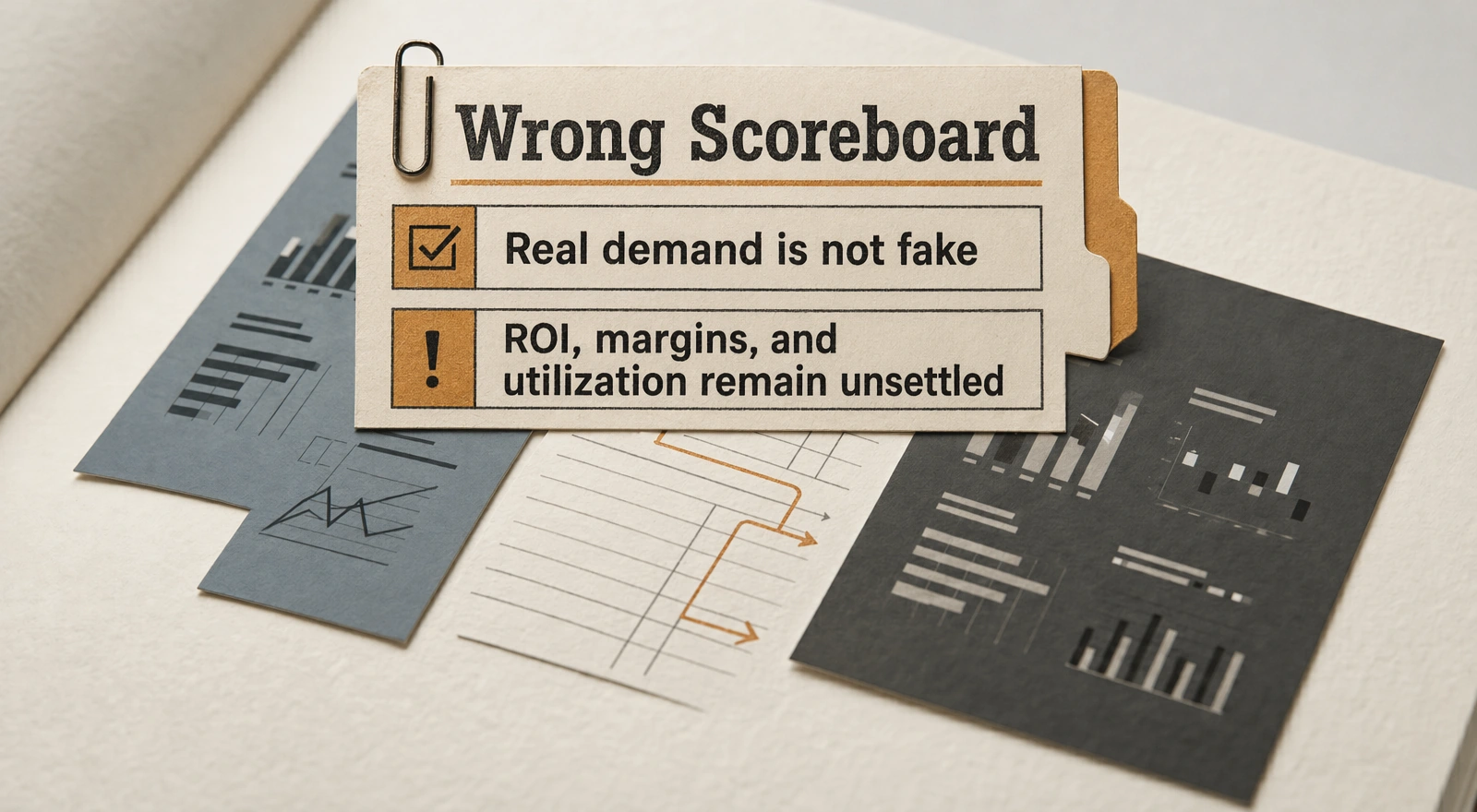
The Scoreboard Is Wrong
The Scoreboard Is Wrong
This is not really a fight between people who think AI is fake and people who think AI is the future. One side is pointing to real money already flowing into the biggest AI companies, which means the demand is real. The other side is asking a different question: when ordinary companies buy these tools, do they actually save time, cut costs, or produce better work? Those are different tests, so a simple bubble-or-not scoreboard misses the point.
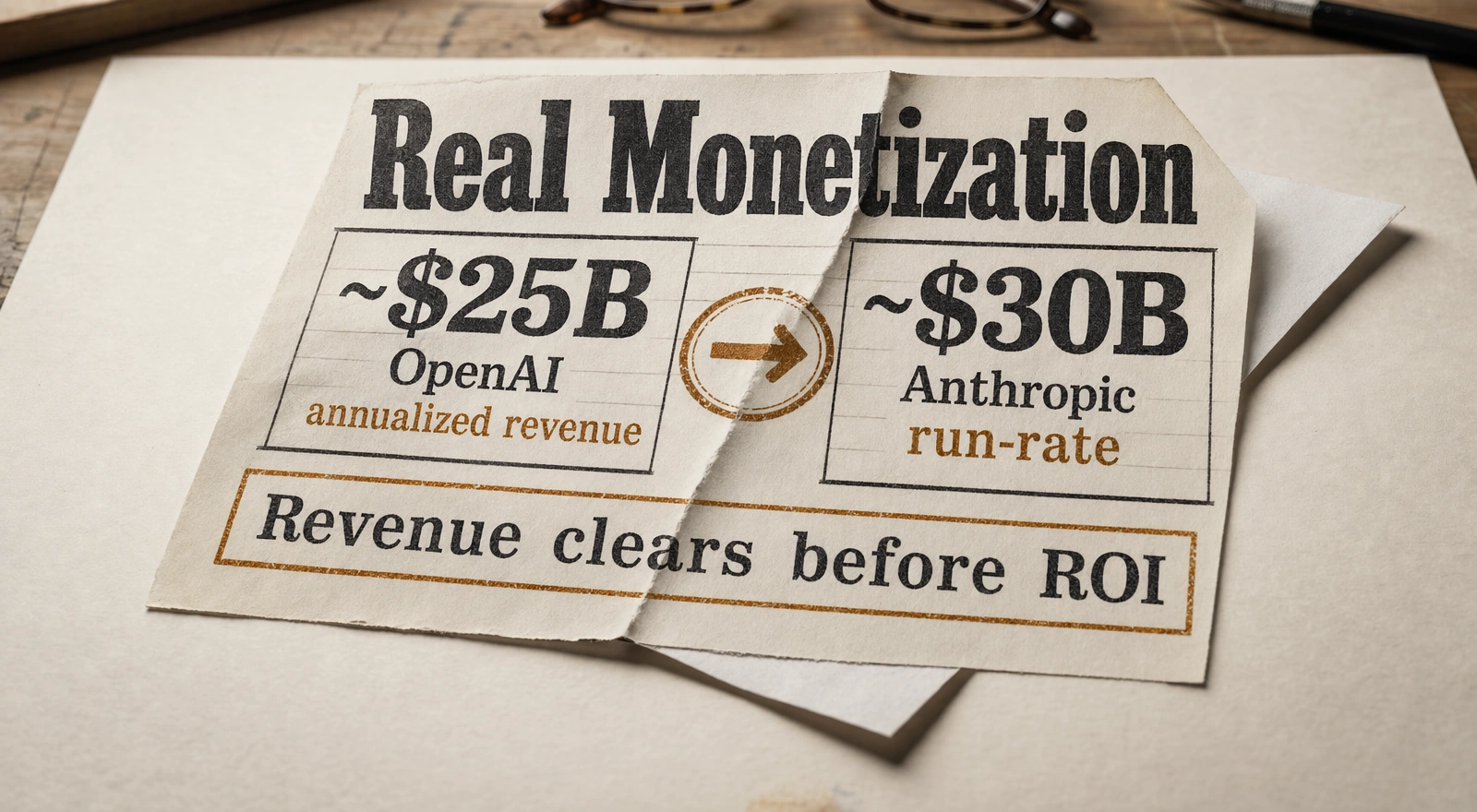
Frontier Demand Has Cleared
Frontier Demand Has Cleared
At the frontier, the demand is no longer theoretical. Companies like OpenAI and Anthropic are reportedly generating very large revenue run-rates, which makes the simplest fake-demand story weak. But revenue at the model company is only the first test. It does not automatically prove that every customer using the model is earning a strong return.
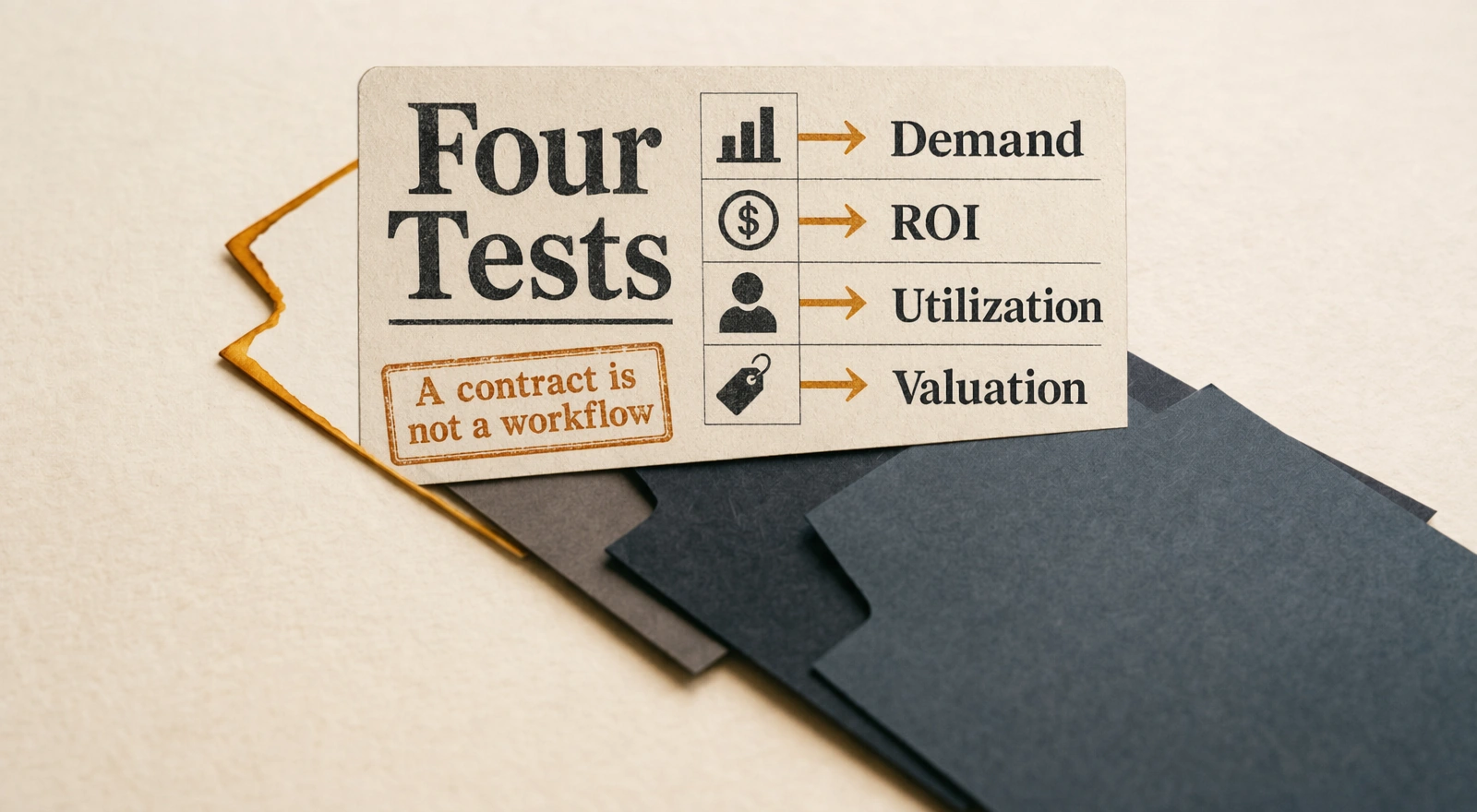
One Boom, Four Tests
One Boom, Four Tests
A single AI boom actually contains several separate questions. Are customers paying for the tools? Are companies getting enough value back? Will the new data centers stay full at profitable prices? Are public and private valuations assuming too smooth a future? One answer cannot settle all four questions.
Enterprise Absorption Is The Weak Layer
Enterprise Absorption Is The Weak Layer
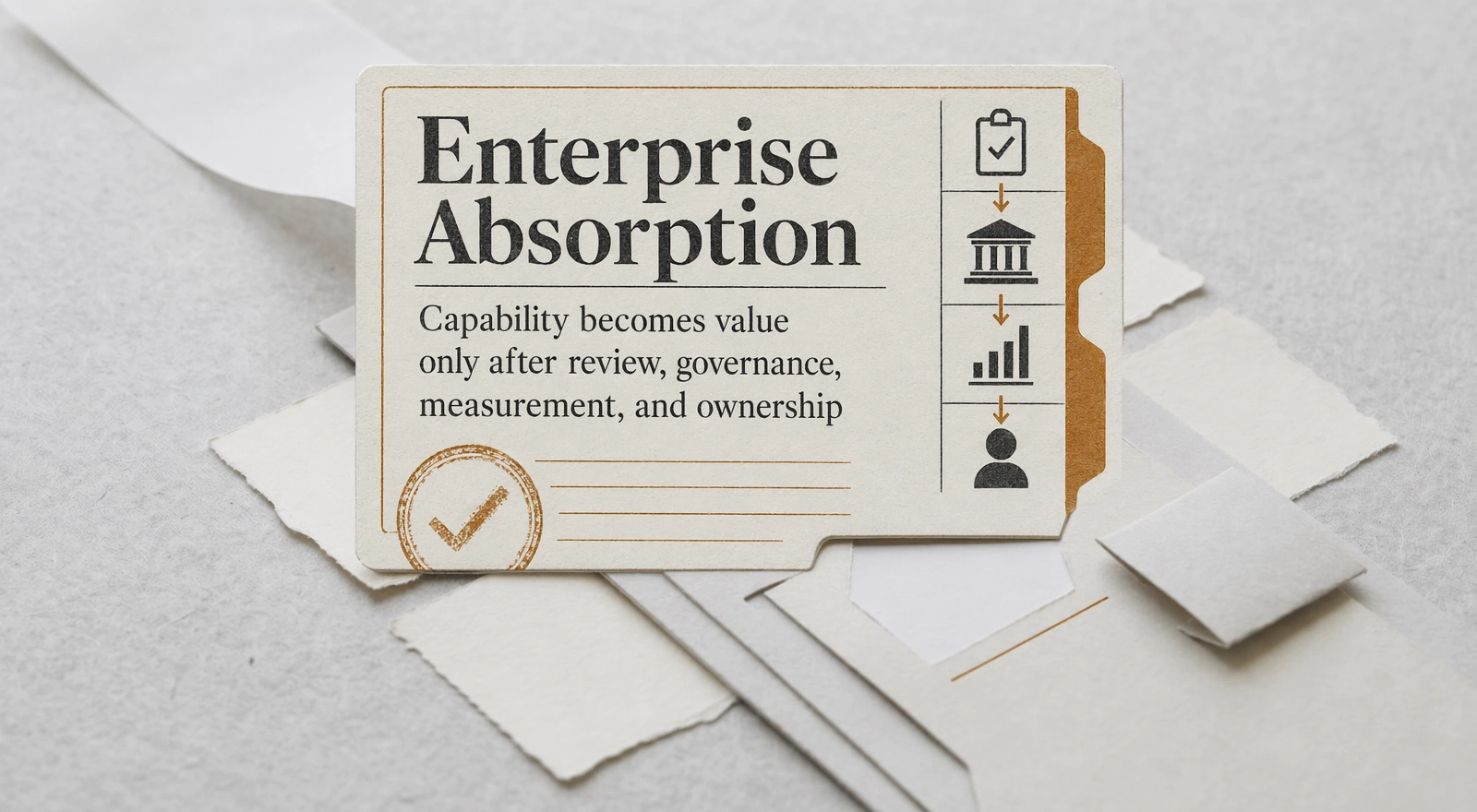
Enterprise absorption is the boring work between a powerful model and a useful business result. A company has to decide where the tool fits, who checks the output, who owns mistakes, what metric should improve, and where the savings or revenue show up. Without that work, AI can become another expensive pilot.
The Risk Lives Downstream
The Risk Lives Downstream
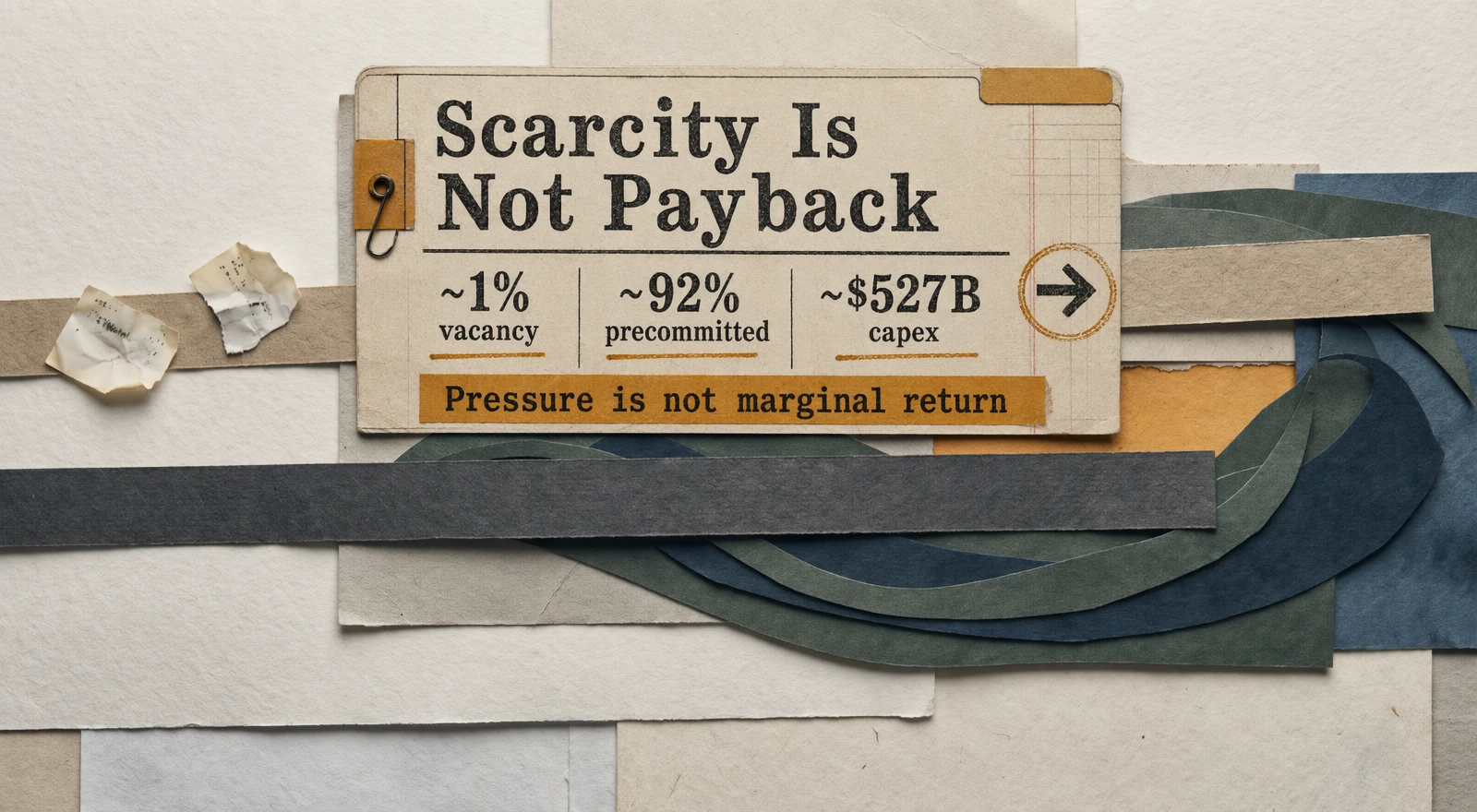
The infrastructure pressure is real: data centers are tight, capacity is heavily precommitted, and the largest tech companies are preparing huge AI capital budgets. But scarcity is not the same thing as profit. A full data center today does not prove that every next data center will earn back its cost.
What Would Change The Verdict
What Would Change The Verdict
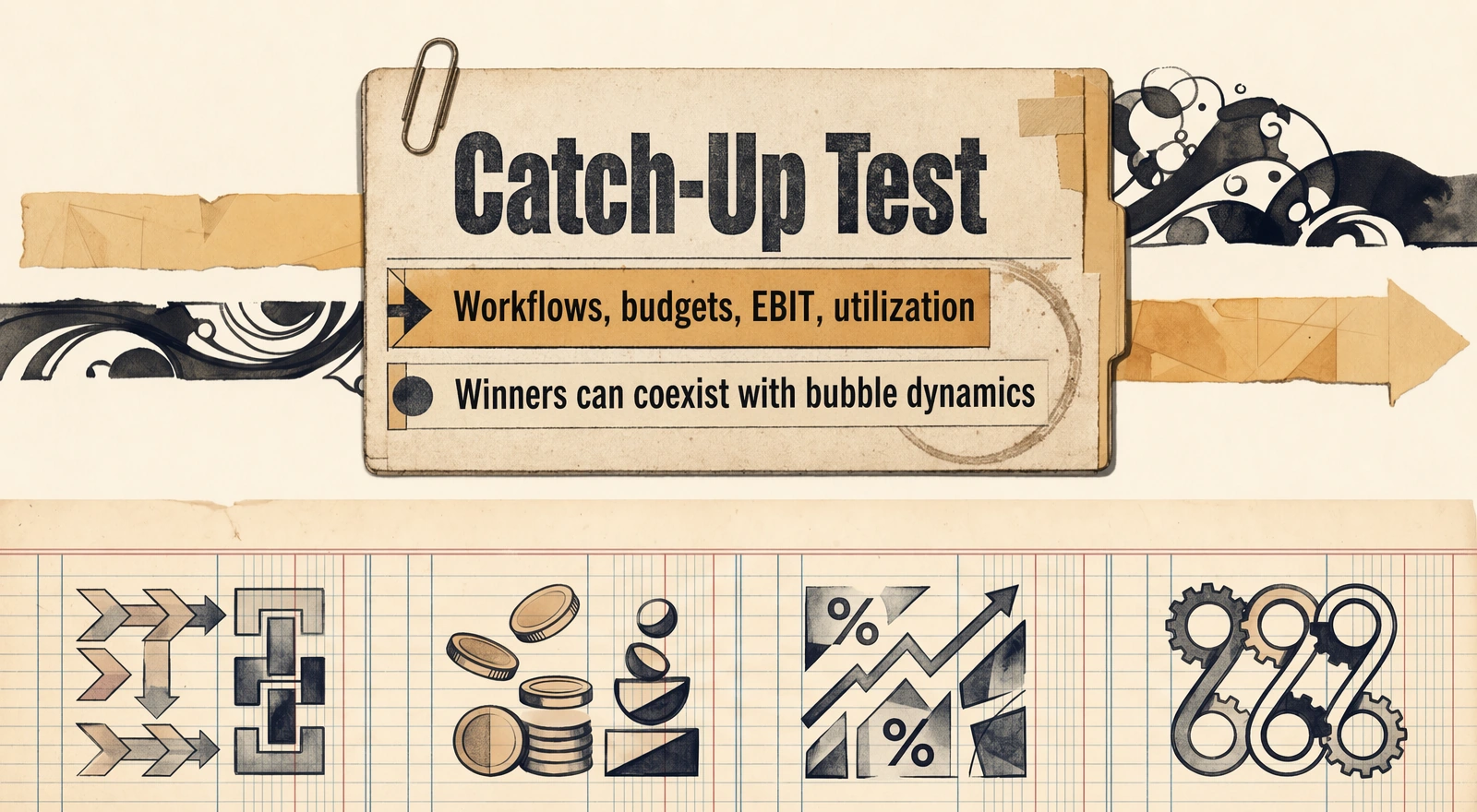
The bullish case gets much stronger if the slower layers catch up. That means more governed workflows, clear budget ownership, measurable profit impact, and durable use of the infrastructure being built. Until then, real winners and bubble-like behavior can exist at the same time.